Case Studies
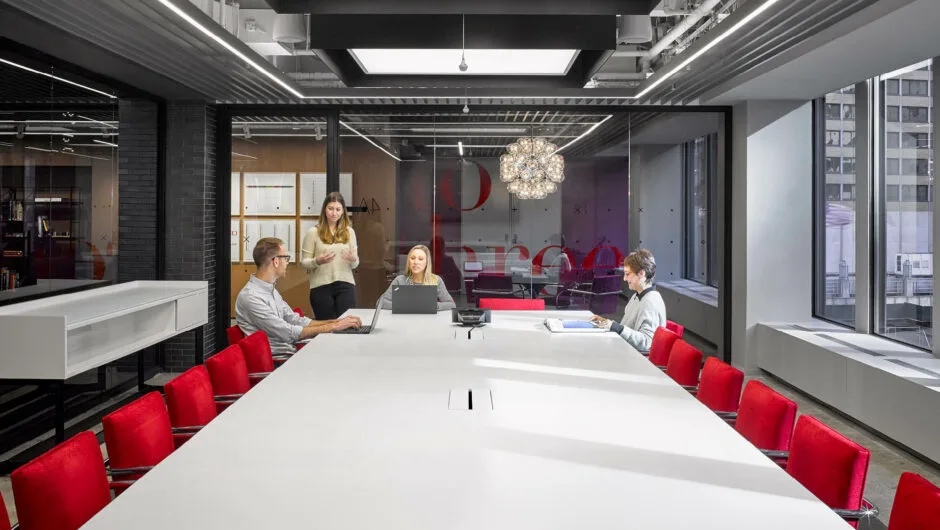
During the consolidation of two portfolios, the client benefited from interactive space planning with Wisp.
How a Global Law Firm Used Wisp by Apex42 to Support Office Consolidation After an Acquisition
Mergers and acquisitions create complex workplace challenges for law firms, especially when real estate and facilities teams need to consolidate offices, align space standards, and support occupants from different firm cultures.
When a global law firm acquired another firm, the organization was introduced to Wisp by Apex42. The acquired firm had already been using Wisp to manage its workplace since 2008, giving the combined organization a proven foundation for space and occupancy management during the transition.
The Demand: Consolidating Offices After a Law Firm Acquisition
The client needed to bring together people, space, and workplace processes across a newly combined organization. Like many law firms, space decisions were influenced by role, credentials, tenure, office standards, and building-specific layouts.
The real estate and facilities teams needed a reliable way to plan the office consolidation, transition occupants into new spaces, and maintain accurate space and occupancy data after the move was complete.
The Solution: Scenario Planning and Space Management with Wisp by Apex42
During the office consolidation, the client used Wisp’s scenario planning modules to model space options and transition occupants into their new locations. Wisp’s interactive features helped the team save time, improve collaboration, and create a shared platform for ongoing workplace planning.
After the move, the client expanded its use of Wisp by loading the rest of its global portfolio into the system. This gave occupants access to an interactive wayfinding system while giving real estate and facilities teams a centralized platform for managing space and occupancy across offices.
The Details: Supporting Law Firm Space Standards with Visual Reporting
Law firms often assign space types based on partner status, credentials, tenure, and other role-specific considerations. To help the client visualize this information, Apex42 created a custom report and colorizer that displays space types across each building.
The colorizer provides a floor-by-floor visual of how spaces are being used and helps identify whether occupants are seated in spaces designed for their role or classification. The client can refresh the report in just a few clicks, giving teams a faster way to evaluate space alignment and support planning decisions.
The Outcome: A Global Platform for Space and Occupancy Management
Today, Wisp serves as the backbone for the client’s space and occupancy management program. Regional representatives meet weekly with their dedicated Client Success Manager to establish consistent global processes, share updates, roll out new initiatives, and collaborate on workplace management strategy.
This ongoing advisory model has helped the client maintain consistency across its global portfolio while continuing to improve how space data, occupancy planning, and workplace processes are managed over time.
40
locations
168
floors
2.9
million square feet
4,758
occupants
14%
vacancy