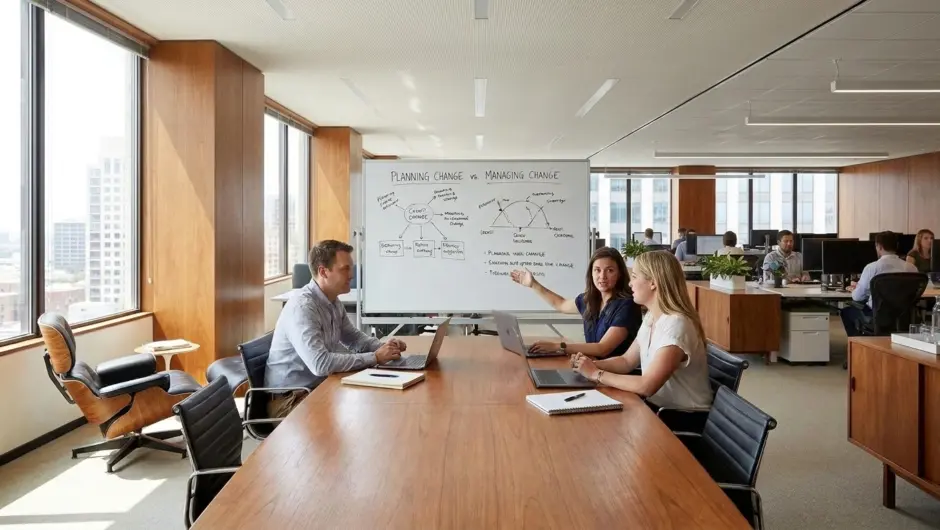
As organizations adjust space strategies more frequently than ever, the ability to connect planning decisions to operational execution has become increasingly important. Moves, adds, and changes, often referred to as MAC, manage these changes happening inside the workplace today. Space planning helps organizations visualize and prepare the workplace they are moving toward. Space planning may begin with a snapshot of current conditions, but workplace change rarely stands still while plans are being developed. Over weeks or months, teams shift, seats change, exceptions happen, and the information behind the plan can quickly become outdated if MAC activity is not keeping pace.
That distinction sounds simple, but it becomes more complex inside a workplace where people, teams, priorities, and space needs are constantly changing. A future-state plan may define headcount growth, department blocking, how neighborhoods should be organized, assigned seating, or how a relocation should come together, but once that plan starts moving into execution, it becomes a series of real workplace decisions. Move phasing and scheduling needs to be planned, move sheets created and shared with movers, change communications to employees, IT and facilities coordinated. In the end, the final outcome very rarely matches the original plan, so tracking changes as phases are executed will help ensure the live workplace record reflects what actually changed.
Space planning consumes data to understand current conditions, evaluate options, and design future workplace scenarios. MAC turns those plans into action, generating new data through moves, adds, changes, assignments, and updates to the workplace. A blocking scenario may turn into seating assignments, or a proposed neighborhood plan may influence day-one coordination, or a completed move request should update the system of record and shape the next planning conversation. When those activities are connected, workplace teams have a clearer path from planning to execution and from execution back to reliable workplace data.
When they are managed separately, the organization can lose the thread between what was planned, what was approved, what was executed, and what is now true. The plan may still exist, and the move may still happen, but the workplace record may no longer accurately reflect the reality of what was ultimately implemented.
That is why the difference between move, adds, and changes (MAC) and space planning matters. It’s not only a question of terminology, it’s a question of continuity across the full lifecycle of workplace change, and it is one of the reasons MAC should be understood as more than move execution.

Space Planning Prepares the Future State
Space planning is the work of preparing the workplace for what comes next by modeling possible future scenarios before changes become operational work. It may support growth, consolidation, relocation, department changes, neighborhood planning, seating assignments, or a broader shift in how the organization wants to use its space.
The value of space planning is that it allows teams to evaluate those possibilities before they become operational work. A workplace team may need to test how departments could fit across a floor, compare blocking scenarios, understand whether a proposed layout can support team needs, or prepare business units for upcoming seating decisions.
In that context, space planning is not simply about arranging seats. It helps teams visualize a future state, align stakeholders around a direction, and understand the workplace impact of a decision before movement begins. That distinction matters because space planning often creates the starting point for MAC activity. Once a future-state plan is approved, the work begins to shift from planning what should happen to managing how it actually happens.
Moves, Adds, and Changes (MAC) Manage the Change as It Happens
Once a space plan begins moving toward execution and/or has been executed, moves, adds, and changes (MAC) become the mechanism that keeps the workplace aligned with what is actually happening.
The approved plan may show where teams are intended to sit, but the operational reality is shaped through individual moves, new assignments, seating changes, department shifts, hybrid work adjustments, and the exceptions that come along the way. Each update may seem small on its own, but together, those changes determine whether the workplace record stays current or starts to drift from reality.
This is where MAC becomes more significant than many organizations realize. It’s not simply the process of completing a move or updating an assignment. It’s the point where planned workplace change becomes live workplace data.
When MAC is managed through emails, spreadsheets, PDFs, or informal approvals, the work may still get done, but the record often falls behind. A team may move, a seat may be reassigned, or a department may adjust its footprint, yet the floor plan, occupancy data, and available space information may not fully reflect the change.
Over time, that gap creates problems beyond move execution. Workplace teams spend more time validating information; reports become harder to trust, and future planning decisions are made from a less reliable view of the current state. In this way, MAC is not just about managing the change in front of you. It is about preserving the accuracy of the workplace information needed for the next decision.

The Difference Between Planning Change and Managing It
The practical difference between MAC and space planning is the difference between planning change and managing it. Space planning helps teams define what the workplace needs to become. It gives them a way to visualize future states, evaluate options, align stakeholders, and prepare for change before it happens. MAC manages the execution of those decisions. It supports the coordination, communication, and data updates required to transition from a planned future state to an accurate, operational current state.
That handoff is where the distinction becomes especially important. A block planning scenario may define where a department should sit and seating assignments may translate that scenario into occupant-level detail. The move sheets then help coordinate the change across facilities, IT, movers, business units, and other teams involved in the execution. Once those moves are complete, MAC activity should update the live record, so the organization has an accurate view of who sits where, what changed, and what space is now available.
Without that connection, planning and execution can drift apart. The organization may know what was intended, but not what changed along the way. It may have an approved plan, but not a reliable record of what was actually executed.
Where Workplace Teams Lose Control
Many organizations don’t lose control because they failed to plan. They lose control because the plan changes, the workplace changes, and the data does not always keep up.
A future-state plan may be accurate at the moment it’s approved, but workplace conditions can shift quickly. Hiring changes, departments reorganize, leaders make exceptions, employees move, and hybrid policies evolve. A space that looked available during planning may no longer be available by the time execution begins, and a seating assignment that made sense in the planning phase may need to be adjusted once teams start coordinating the actual move.
When there is no clear connection between space planning, plan execution, and day-to-day realities from MAC activity, teams can lose confidence in their data. They may know what was planned, but not what changed along the way, or they may know what was approved, but not what was actually executed. This leads them to having a final seating chart, but not an accurate reflection of what actually took place and therefore an unreliable system of record once the moves are complete.
That creates a familiar problem for workplace teams. They spend time validating information before they can act on it, answer the same questions repeatedly because the source of truth is not fully trusted, and manage exceptions manually because the process is disconnected from the data. Over time, the issue becomes larger than operational inefficiency. It becomes a decision-making problem because the organization loses confidence in the information behind its workplace decisions.
This is also where MAC activity can become more valuable than many teams realize. When moves, adds, and changes are tracked consistently, they do more than document completed work. They show how the workplace is changing over time.
A single move request may be tactical, but repeated requests from the same department can point to growth, space pressure, or a mismatch between the current plan and how the team works. Frequent seating changes in one area may suggest that the original plan no longer supports actual business needs, while a rise in requests tied to hybrid employees may indicate that assignment standards need to be revisited.
This is an important part of the MAC and space planning relationship. Space planning may create the plan that leads to movement, but MAC activity helps teams understand whether that plan is holding up once people, teams, and priorities begin to shift.
In that way, MAC does not sit at the end of the process. It becomes part of the feedback loop that keeps workplace data current and informs the next space planning decision.

Why Connecting Moves, Adds, and Changes (MAC) and Space Planning Matters
Accurate workplace data is what connects space planning and moves, adds, and changes (MAC). Space planning needs reliable data to model the future, MAC needs reliable data to manage the present, and once movement happens, the data needs to be updated so the organization can continue planning from a current foundation.
This is why floor plans and occupancy data should not be treated as static outputs. A floor plan represents the current state of the workplace; occupancy data reflects how people, teams, and departments are assigned across space and move information documents how the workplace is changing over time.
When these pieces are connected, workplace teams can move more easily between planning, execution, reporting, and future decision-making. A space plan becomes the starting point for coordinated execution, seating assignments can become move sheets, move sheets can support day-one coordination, completed moves can update the live record, and updated records can inform the next planning scenario. That connection gives workplace teams a clearer path from future-state planning to current-state accuracy. It also gives leadership more confidence that space decisions are grounded in current information instead of assumptions.
For organizations managing this level of change, the goal is not simply to move faster. It is to create a more connected way to manage workplace planning, move activity, floor plans, occupancy data, and the decisions that depend on them. Apex42 helps teams bring those pieces together through Wisp and the services that support it, giving workplace teams a clearer view of what is planned, what is changing, and what is true across the workplace.
A More Connected Approach
Moves, adds, and changes (MAC) and space planning serve different purposes, but they are part of the same workplace change lifecycle.
Space planning helps organizations visualize and prepare for the workplace they are moving toward, while MAC manages the changes happening inside the workplace today and helps preserve the accuracy of the live record as those changes occur. For workplace teams, the value is not only in knowing the difference between the two. The value is in connecting them.
When MAC and space planning are managed together, organizations gain a clearer path from planning to execution and from execution back to reliable workplace data. Move activity becomes more than a completed task list, and space planning becomes more than a future-state exercise. Together, they help teams understand what was planned, what was approved, what was executed, and what is now true; that is how a single source of truth is achieved.
The organizations that manage workplace change most effectively are not necessarily the ones with the best plans. They are the ones that maintain continuity between planning, execution, and workplace data that informs the next decision.
Learn how Apex42 helps workplace teams connect planning, move activity, and reliable space data.
For media inquiries, email info@apex42group.com.